
Article: How to Choose Textured Neutral Wall Art for Your Room

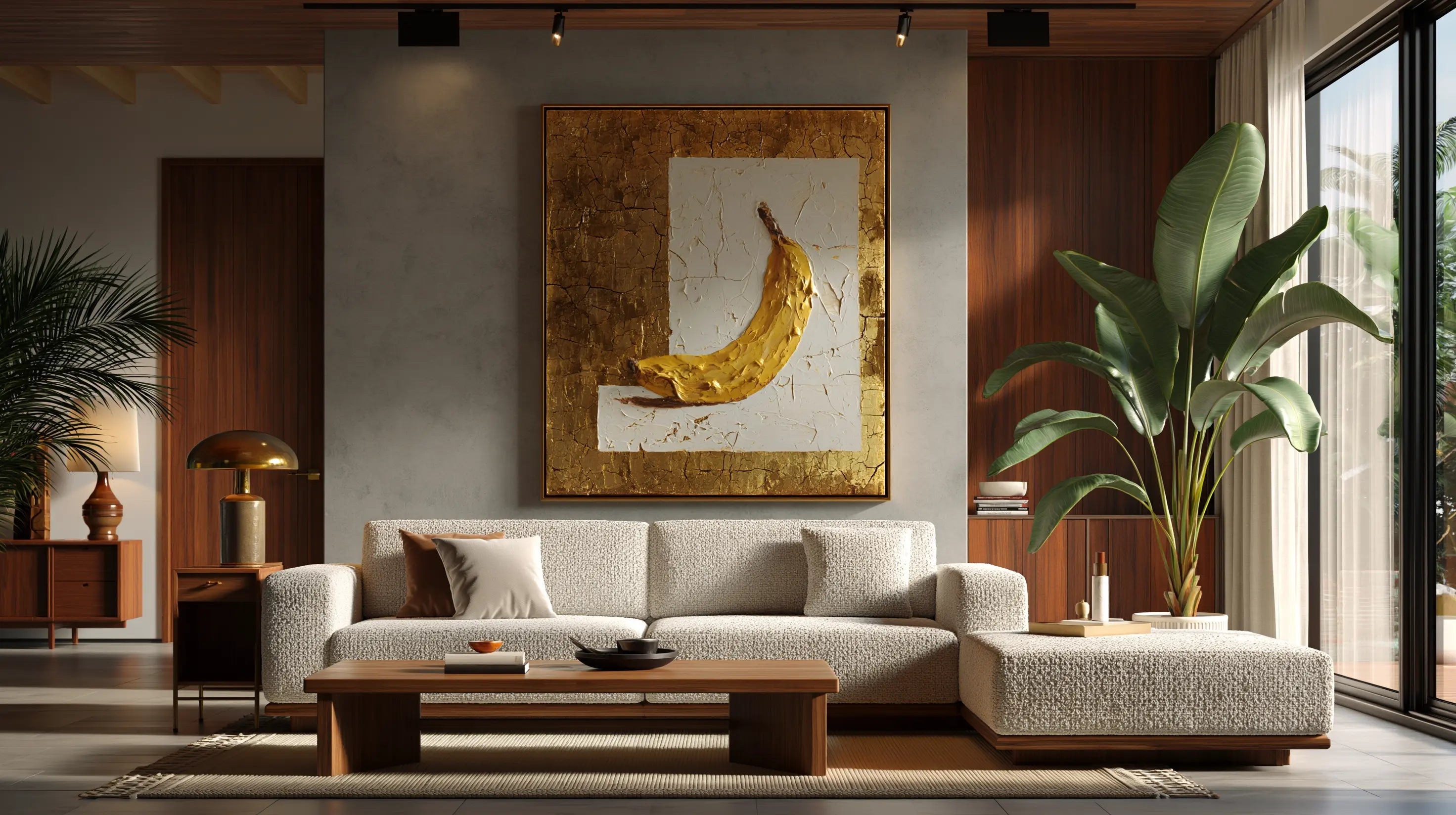
How to Choose Textured Neutral Wall Art for Your Room
Choose textured neutral wall art by comparing three things: how its colors relate to your room, how the surface looks in your lighting, and whether the finished size fits your wall. A pale painting can still become a strong focal point through raised marks, contrasting shapes or a darker accent.
What is textured neutral wall art?
Neutral wall art uses a restrained palette, often including ivory, beige, taupe, gray, brown or black. Texture describes the surface or the appearance of surface detail. Visible depth, layered paint and directional marks can produce different effects from a smooth surface.
Check the individual artwork description and close-up photos for the materials and finish. A product name or a styled room photo alone cannot confirm whether a surface is raised, which paints are used or what frame is included.
How do you choose a neutral color for your room?
Compare the painting with the room's largest fixed elements: flooring, walls, furniture and curtains. Decide whether you want to repeat an existing tone or add contrast. Warm beige and brown can relate to wood and natural fabrics; gray, black and ivory can create a different balance depending on the surrounding colors.
View your shortlist in the room where it will hang. Daylight, lamps and screen settings can change how colors appear. If an exact match matters, ask for further photos or clarification before ordering rather than relying on one screen image.
How does lighting affect the appearance of texture?
Light arriving from the side can emphasize raised details and their shadows. More even light may make the same surface appear softer. Compare a full view with close-up images, and think about the direction of windows and lamps in your space.
For an online purchase, ask which images show the artwork's surface and which show a room setting. Use room images to consider placement, then check product details for the actual size, materials and finish.
What size should you choose above a sofa or bed?
There is no single size that fits every sofa, bed or wall. Measure the usable width and height, note nearby doors, switches and furniture, then outline a possible size with paper or tape suitable for your wall. View it from your usual seating position before deciding.
Confirm whether dimensions describe the canvas or the finished outer frame. For a set, check each panel and the gaps: two panels each 24 inches wide with a 2-inch gap require 50 inches of display width before any additional outer-frame width. This is a measurement example, not a standard size recommendation.
Compare square paintings, vertical paintings, horizontal paintings and painting sets. Our canvas wall art buying guide explains the planning process in more detail.
Should you choose a subtle surface or bold relief?
Start with how much visual detail your room already contains. A quieter composition can sit alongside patterned fabrics or varied objects. More pronounced texture can become a focal point in a simpler setting. Compare the full composition and the close-up details together; neither view tells the whole story.
Explore textured and relief art, Wabi-Sabi paintings and minimalist art, then open individual products to check their surface, palette and available options.
What should you confirm before ordering?
- The artwork, selected size and orientation.
- The stated materials and the close-up surface details.
- The finish you selected and whether an outer frame is included.
- The finished dimensions, including every panel and gap in a set.
- The current production, shipping and return terms for your order.
Read the artwork FAQs, shipping policy and return policy for current store information. For help comparing options, contact Viarteart with the product link, your wall measurements and the finish you are considering.